
Sentiment Volatility (Or How To Be Slightly Less Stupid)
What is "sentiment volatility" and why understanding it might help you to see more clearly.

When I began diving into Bitcoin sentiment data, I wasn’t sure what to expect.
Would I see myself in the data?
Would I uncover any novel lessons or perspectives?
Turns out both were true, and the answer I found was quite revolutionary...
I am an idiot.
Honestly, I should have seen it coming.
At every other domain I’ve gotten good at there was a long period of doing stupid things before learning from those mistakes, integrating the lessons, and moving forward as a better and more complete human.
Of course navigating the Bitcoin markets would be no different.
I’d read about investing and markets for years before getting involved in Bitcoin, but having skin in the game simply hits different when you are watching your family’s net worth numbers ping-ponging around on a screen on an hourly basis.
I’d developed so many good habits. Consistently DCAing, stacking sats, and creating work that brought value into the world. But even still I made some dumb decisions.
These habits allowed me to buy a handful of shares of MSTR beneath $20... but as the sentiment of the Bitcoin Treasury space surrounded me, I became blind.
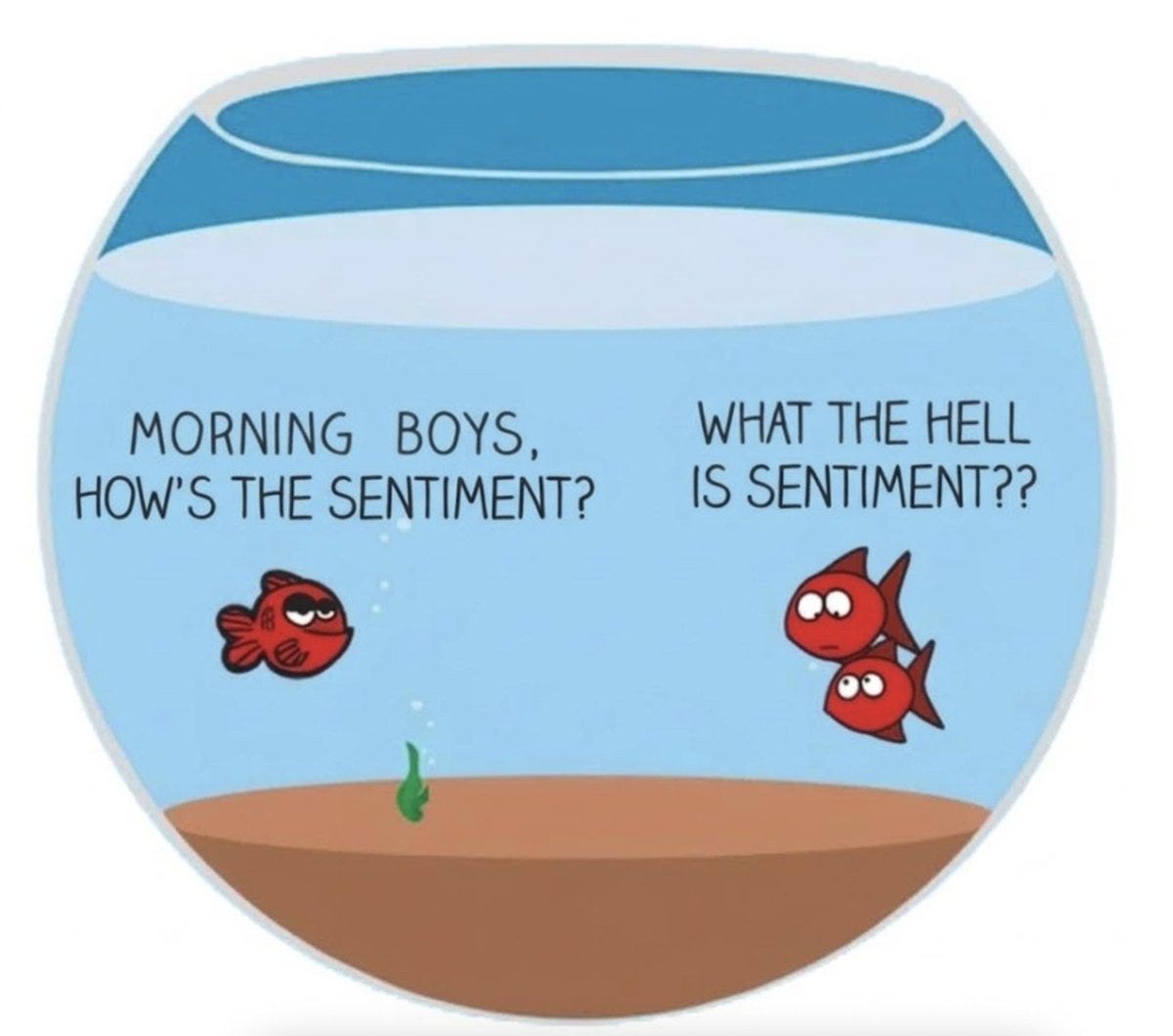
I’m consistently reminded of the “What is Water” meme.
Where one fish says to the others “How’s the water today boys?”
And they respond asking “What is water?”
You don’t see that which you exist inside of, and if you are reading this, you likely are influenced by the broader market sentiment.
We are all swimming in this water all the time.
We live in a sea of sentiment and are often blind to how powerfully we are persuaded by it.
See, I was certainly blind to the sentiment.
I felt like a genius at the time since I was so actively writing about and learning in public as MSTR went on it’s euphoric run towards the end of 2024.
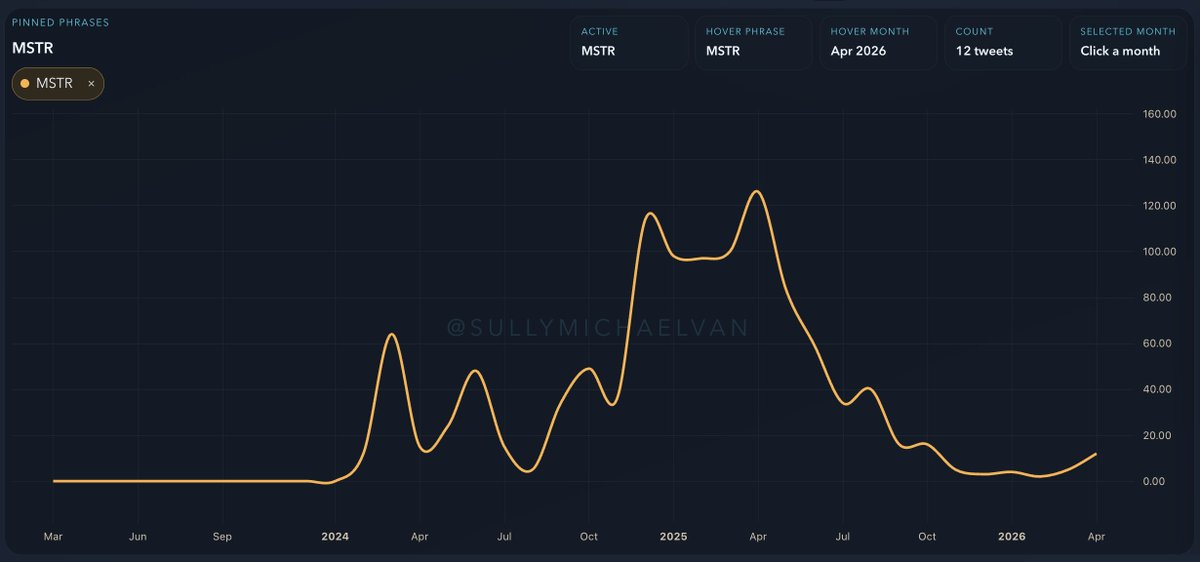
You can literally see both of MSTR’s price peaks in the volume of tweets I made using the phrase “MSTR” over this precise time period.
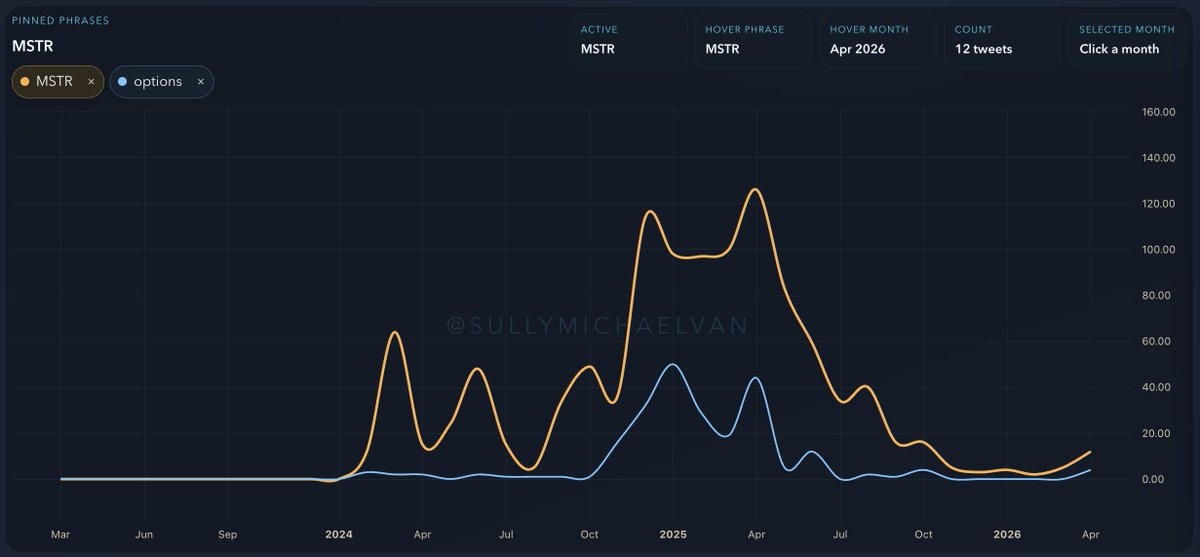
But back then, because of the high volatility, I thought it would be a great idea to explore more around MSTR options and start writing about it (and subsequently get my face ripped off).
Here you’ll see where I also added the word “options” to the mix and you’ll note how well it lines up with those euphoric peaks in MSTR’s price.
My timing was comically bad.
And even though my primary interest is (and continues to be) Bitcoin, I’d certainly prefer to NOT have lost so much during the Bitcoin Treasury Company euphoria.
But I’m human.
I learned my lesson here... but I’d like to reduce the likelihood I get swept up in the sentiment in the future, so I started digging through the sentiment data.
So I wanted to know, was this just me, or is this what everyone does at peaks?
What I found was that I wasn’t the outlier at all... in hindsight this was incredibly predictable.
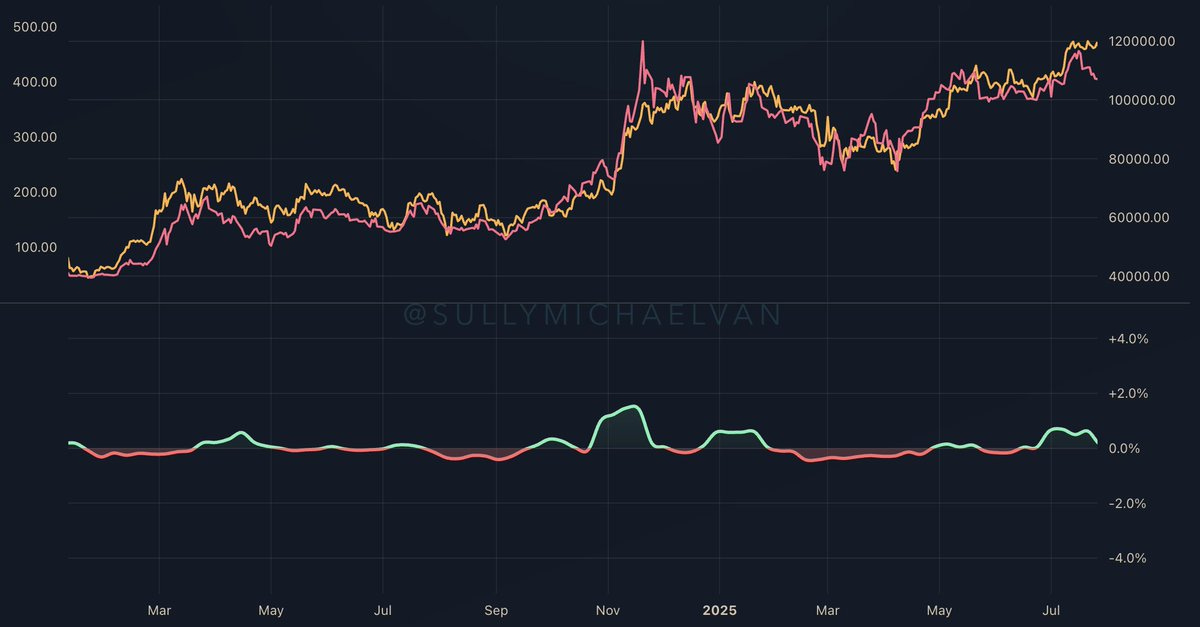
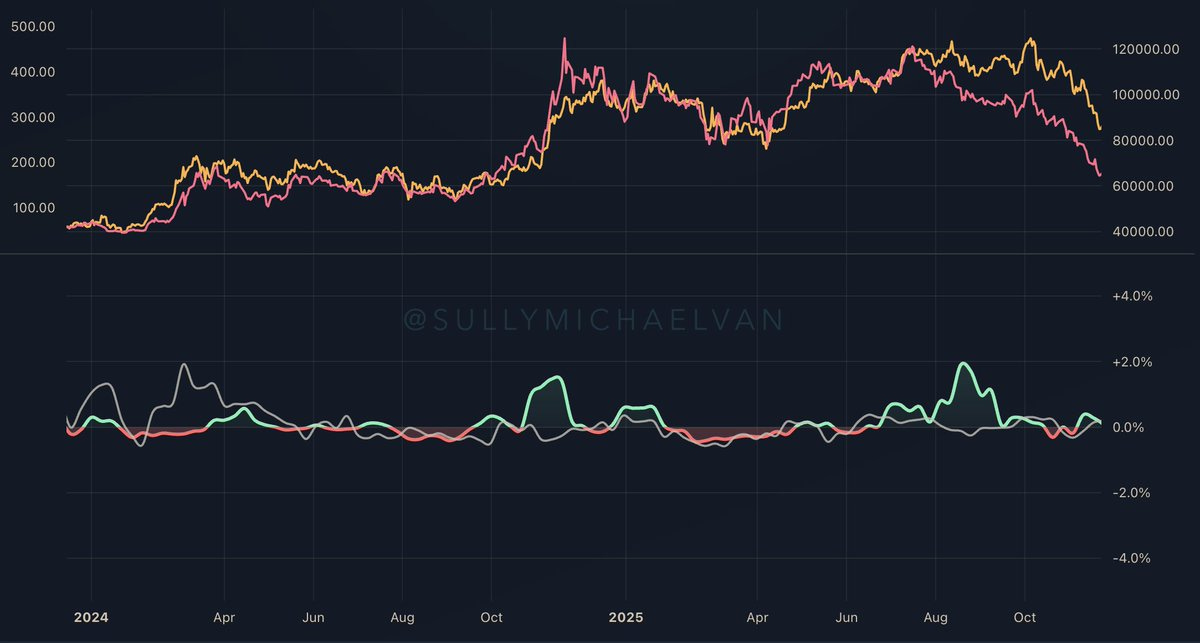
This is the price of MSTR (red) and BTC (orange) plotted against the average “optimism” levels (measured through the tone of their language) for a cohort of Bitcoiners that are retail investors and newer to Bitcoin.
Note the high levels of “optimism” in their language right in line with this euphoric peak. This tends to spike when people feel the most confident, and often happens at local peaks.
This group of users (much like myself) got completely consumed by the present narratives of the time.
Now let’s contrast those “optimism” levels with Bitcoin OGs (plotted over the previous bottom line, but in grey).
Notice the differences on the chart below?
The Bitcoin OGs were much more optimistic earlier in the bull run than the average newer Bitcoiner when the ETF approvals were happening.
Then they were much more muted at that blow-off top period, and again when we got back up to ATHs later in the year.
Why?
Why are their mood levels (as reflected in their language) less wrapped up in the euphoria where the newer market participant gets consumed.
You can form your own theories, but I personally think the "Proof of Work" principle that is foundational to so many domains in life is also relevant here.
They've gone through this before.
It's not about IQ.
It's not about testosterone (well, maybe a little bit about testosterone).
If you've gone through this patterns before and stuck around Bitcoin you have the kind of experience that most of the people new to the markets simply don't have.
This might be the most interesting aspect I've discovered the more I've researched Bitcoin market sentiment... but there is another thing I find equally interesting.
You see, OGs were not always OGs.
If I look much further back into the language of their posts over time, another observation becomes clear.
They too even used to be much more impacted by swings in sentiment.
Here is a chart showing the average "optimism" language used by these OGs over time, charted against the Bitcoin price for reference.
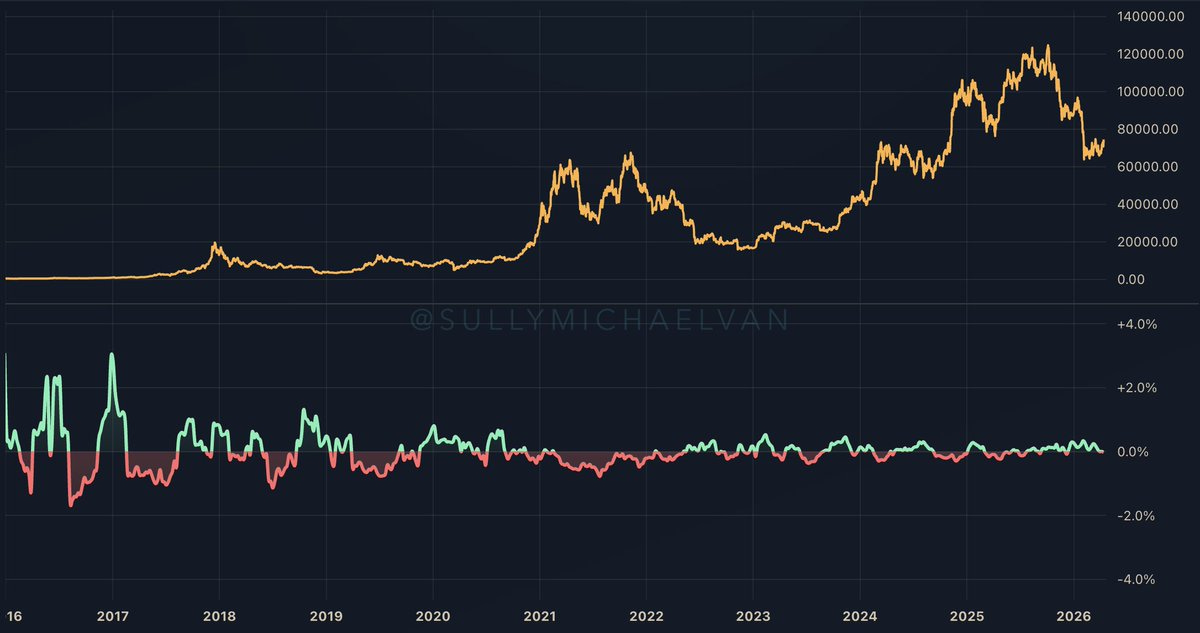
It’s the same group of people, but their mood swings were once significantly more pronounced.
This might seem obvious.
Bitcoin’s volatility has consistently decreased over time. So too, you might expect for the “volatility” of these users “sentiment” to decrease over time.
But I don’t think that explains all of it.
For example, a huge portion of people in this most recent cycle were invested in Bitcoin Treasury Companies like MSTR that traded with significantly more vol than Bitcoin did even a few years ago.
So what is going on?
I personally think a bit part of the decrease in “sentiment volatility” is market participants becoming more immune to the euphoric narratives over time, and many even positioning themselves more intelligently.
I see this in myself and my friends in the Bitcoin space.
People that have been here longer are so much more resilient to small moves in price.
We’ve seen it.
We don’t care.
We know this thing is just gonna keep spitting out block after block and being a steady constant in a world that is oftentimes getting crazier by the day.
So what’s the takeaway, Sully?
Have you successfully become ‘Slightly Less Stupid’?
Probably not.
I don’t have a perfect answer, but I do think it’s critical that we learn from our experiences and transmute our pain into progress.
Sentiment data is one useful tool that I’ll be using to do just that.
This the exact information that hedge funds are typically using for trading purposes, but what’s most interesting to me is using this data to form a more accurate worldview.
I’m not a good trader (clearly), but I think there are some fantastic lessons in here for the most average sat-stacking bitcoiner.
Narratives will come.
Narratives will go.
But don’t let yourself get too swept up in the sea of sentiment.
Instead of being crushed beneath the turbulent tides of euphoria, perhaps together, we can learn to ride it like a wave.